
What Gear Does a Public Safety Dive Team Need? A Checklist from Dive Professionals
Brent Clevenger Sep 27, 2026
When a call comes in for a submerged vehicle, a drowning, or evidence in the water, your dive team doesn't get to pick the conditions. In the lakes and rivers around Charlotte, that usually means zero visibility, cold water at depth, boat traffic, and water you wouldn't want to swallow.
Public safety diving is not recreational diving with a different patch on the shoulder. The gear is different because the job is different. At Sink or Swim Scuba, we've spent 21 years in the water and have a background in public safety and emergency response. Here's the equipment we recommend every public safety dive team build around.
1. Full-Face Mask with Communications
A standard mask and regulator leave the diver's mouth and face exposed to contaminated water, and they make talking impossible.
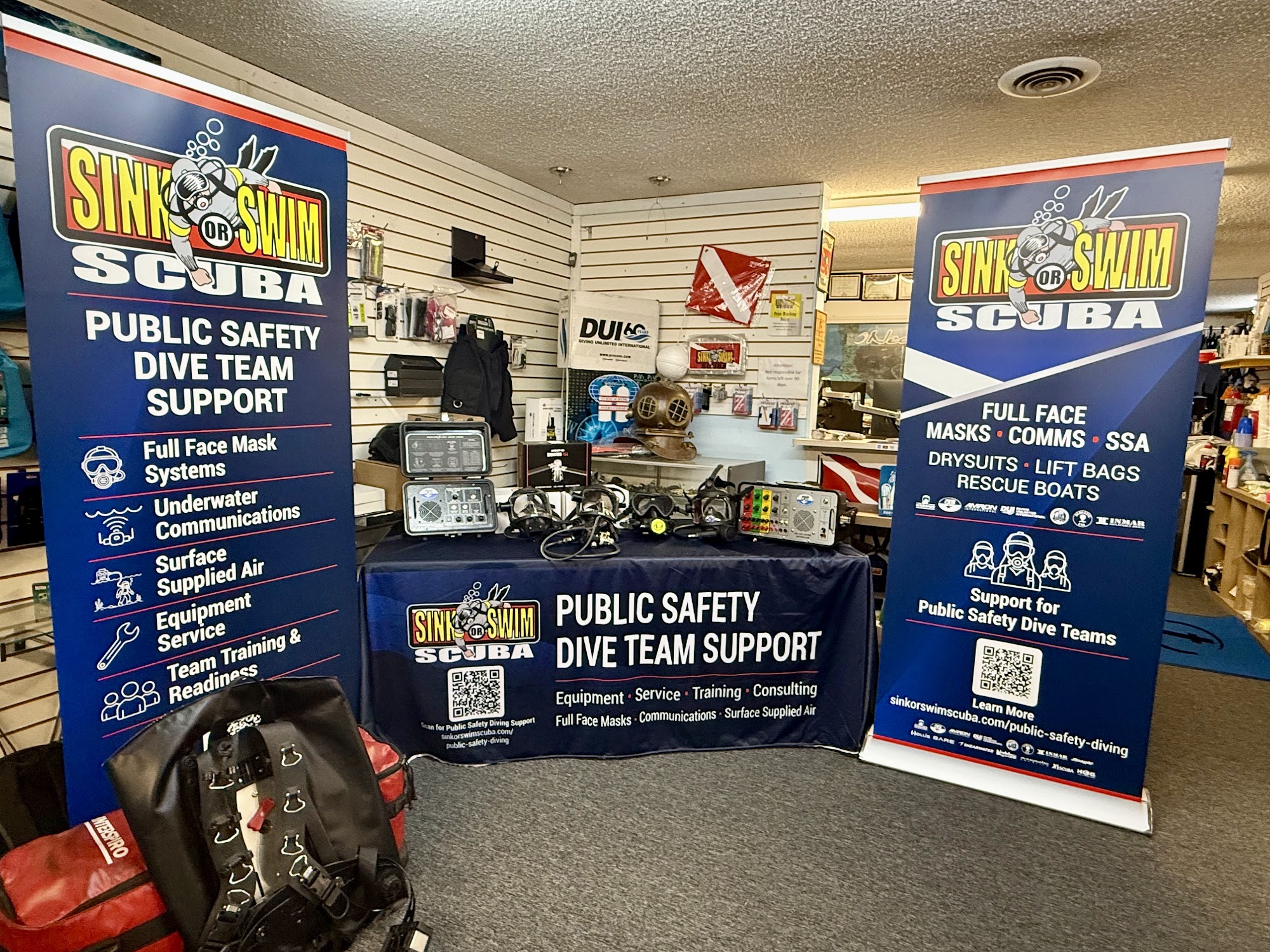
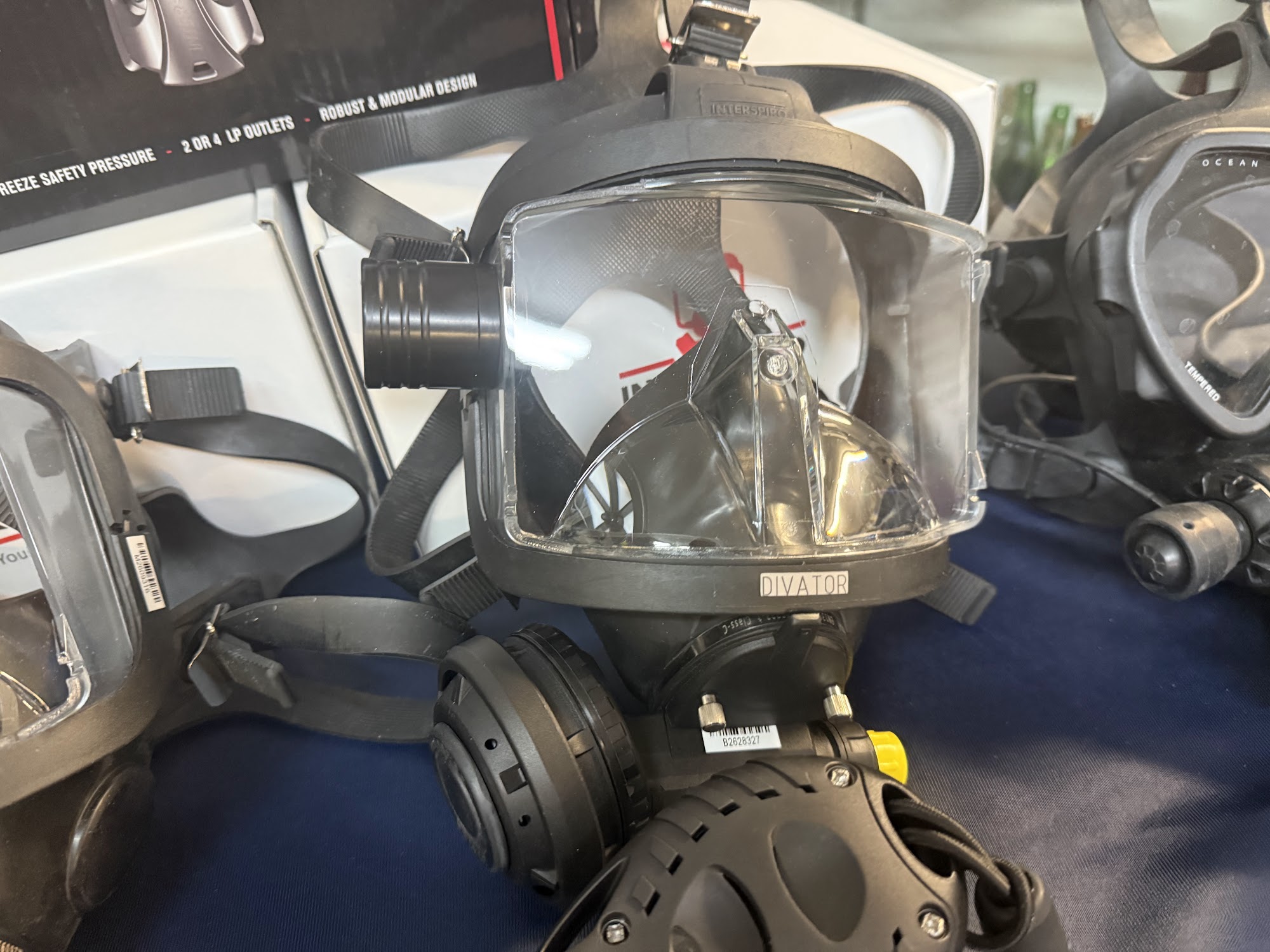
A full-face mask protects the diver's airway and lets them wear a communications unit — hard-wired through the tether line or wireless through the water. We outfit teams with both the Interspiro Divator Full Face Mask and the OTS Guardian Full Face Mask — the two masks most public safety teams actually run, each with its own comms setup.
Look for: a proven full-face mask like the Divator or Guardian, a comms system your team trains on regularly, and spare parts kept in the truck.
2. Drysuit Built for Contaminated Water
Lakes and rivers after a flood, a crash or a fuel spill can carry fuel, sewage, chemicals and bacteria. A standard neoprene wetsuit soaks that water up and holds it against your skin.
Teams diving in suspect water should use a vulcanized rubber or trilaminate drysuit that can be decontaminated. Pair it with attached or sealed dry gloves and hood, so no skin is exposed. See our full lineup of public safety drysuits — HAZMAT, HYBRID, MOS SAR, and more, each built for a different mission profile.
Look for: a suit that can be scrubbed and disinfected, with gloves and hood that seal completely.
3. Redundant Air Supply
Public safety divers work tangled in debris, inside vehicles and under docks. If the primary air supply fails, there may be no buddy close enough to help.
Every diver should carry an independent redundant air source, usually a pony bottle with its own regulator, that can be switched to without surfacing. For surface-supplied operations, we also outfit teams with the Interspiro DP-1 surface supply system.
Look for: a bailout bottle sized for your team's typical depth and working time, mounted where the diver can reach it blind.
4. Harness and Tether System
Most public safety search patterns are run from the surface on a tether line. The line tender controls the search, keeps track of the diver, and can pull them out in an emergency.
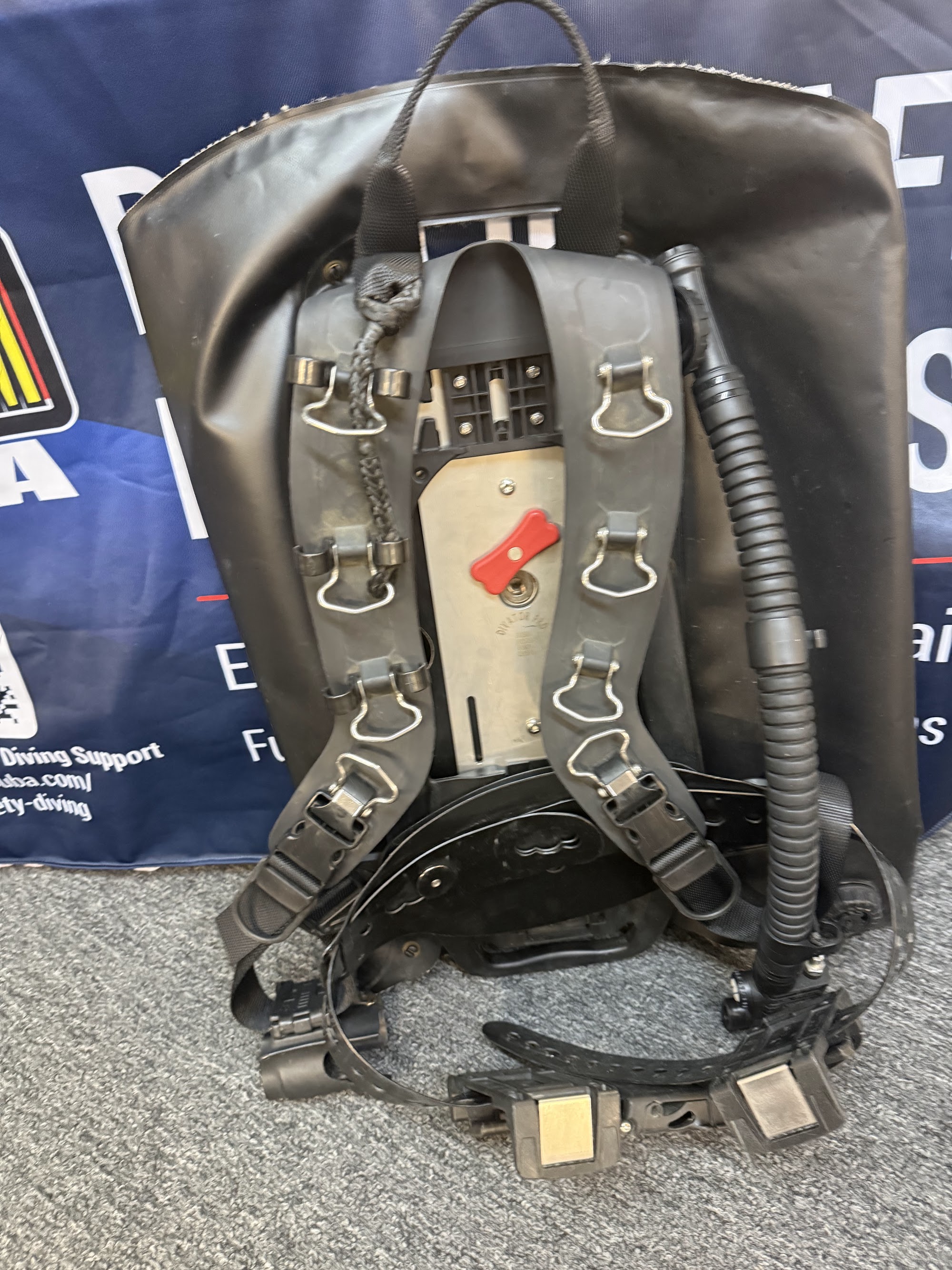
The diver needs: a harness with a sturdy attachment point that loads safely, a quick-release the diver can operate, and a tether line in good condition that's inspected after every use.
The team needs: trained line tenders who know the line-pull signals, and a fully dressed backup diver ready to go the moment the primary diver enters the water.
5. Cutting Tools (More Than One)
Fishing line, rope, fencing and vehicle wiring are everywhere at the bottom of a lake. Every diver should carry at least two cutting tools, such as trauma shears and a line cutter, mounted in places both hands can reach.
6. Lights and Marking Tools
Even in "zero visibility," a light helps at close range when reading gauges, checking a vehicle interior or signaling. Carry a primary light and a backup light, plus buoys or markers to flag a find for recovery or evidence.
7. Decontamination Supplies at the Surface
The dive isn't over when the diver surfaces. Keep a decon station ready: rinse water, approved disinfectant, brushes and a plan for handling contaminated gear. Divers should stay fully dressed until they've been rinsed.
8. Training That Matches the Gear
Gear only works when the team trains with it until it's second nature. Public safety diving is covered by industry standards, including NFPA 1006 for rescuer qualifications and NFPA 2500. Check the current editions with your agency.
ERDI (Emergency Response Diving International) is the public safety branch of the SDI family. As a 5-Star SDI Instructor Development Center, we teach the full ERDI progression on our public safety diver training pathway — Emergency Response Diver I & II, Full Face Mask Diver, Contaminated Water Operations, Dry Suit Diver, Surface Supply Diver, Tender, and Underwater Crime Scene Investigator.
Public Safety Dive Team Checklist
- Full-face mask with communications (Interspiro Divator or OTS Guardian)
- Contaminated-water drysuit with sealed gloves and hood
- Redundant air source (bailout/pony bottle, or surface-supplied)
- Harness, tether line and trained line tender
- Fully dressed backup diver on every dive
- Two or more cutting tools, reachable with either hand
- Primary and backup lights, plus marking buoys
- Surface decontamination station
- Current, documented team training
Outfit and Train Your Team with Sink or Swim Scuba
We work with fire departments, rescue squads and law enforcement dive teams across North Carolina, South Carolina and nationwide. We can help your agency:
- Choose gear that fits your mission and budget
- Train and certify new team members through our full ERDI pathway
- Service and inspect your existing equipment — we're an authorized Interspiro and OTS service center
- Put together a complete team package, including agency purchase orders and phased quotes
Learn more about our public safety diving training and support, see our Interspiro distributor and service page, or request an equipment consultation for your team.
