
Three Weeks Under Lake Adger: Rigging Hurricane Helene Debris at Turner Shoals Dam
Brent Clevenger Sep 21, 2026
For the better part of three weeks, our dive crew has been in the water at Lake Adger in Polk County, North Carolina — ten-hour days, seven days a week, no days off — rigging Hurricane Helene storm debris off the bottom at the Turner Shoals Dam so it can be winched out of the lake. This is part of one of the largest storm-recovery efforts in western North Carolina, and it is exactly the kind of work public safety and commercial dive teams get called for after a big storm. Here is what the job actually looks like, what gear is carrying the load, and what is breaking.
What Helene left in Lake Adger
When Helene came through in September 2024, the Green River pushed an enormous amount of sediment, trees, and debris down into Lake Adger. The state-led restoration project has been running since early 2026, and as of the county’s September update, crews had pulled more than 486,000 cubic yards of sediment and roughly 3,700 cubic yards of vegetative debris out of the lake (Tryon Daily Bulletin, Sept. 10, 2026).
Our piece of it is the part the dredges cannot reach: the logs, root balls, and tangled branches that settled against the dam structure. That debris has to be found and rigged by hand underwater so the crews topside can lift it with winches. To make the dive work safer, the lake was drawn down about five feet for the duration of the dam work, and boaters are being kept 300 feet back from the active zone.
What a day on the job looks like
There is nothing glamorous about it. Visibility on the bottom near the dam is close to zero, so this is hand-over-hand work: a tethered diver on hardwired comms locates a log or a root ball by feel, gets a rigging strap around it, calls it up to the tender, clears the lift, and the winch operator takes it from there. Then the diver moves to the next one. Working against a dam face means respecting the structure and the water movement at all times, which is why every diver on this job is on a full-face mask with hardwired communications and a tender who never loses contact with them.
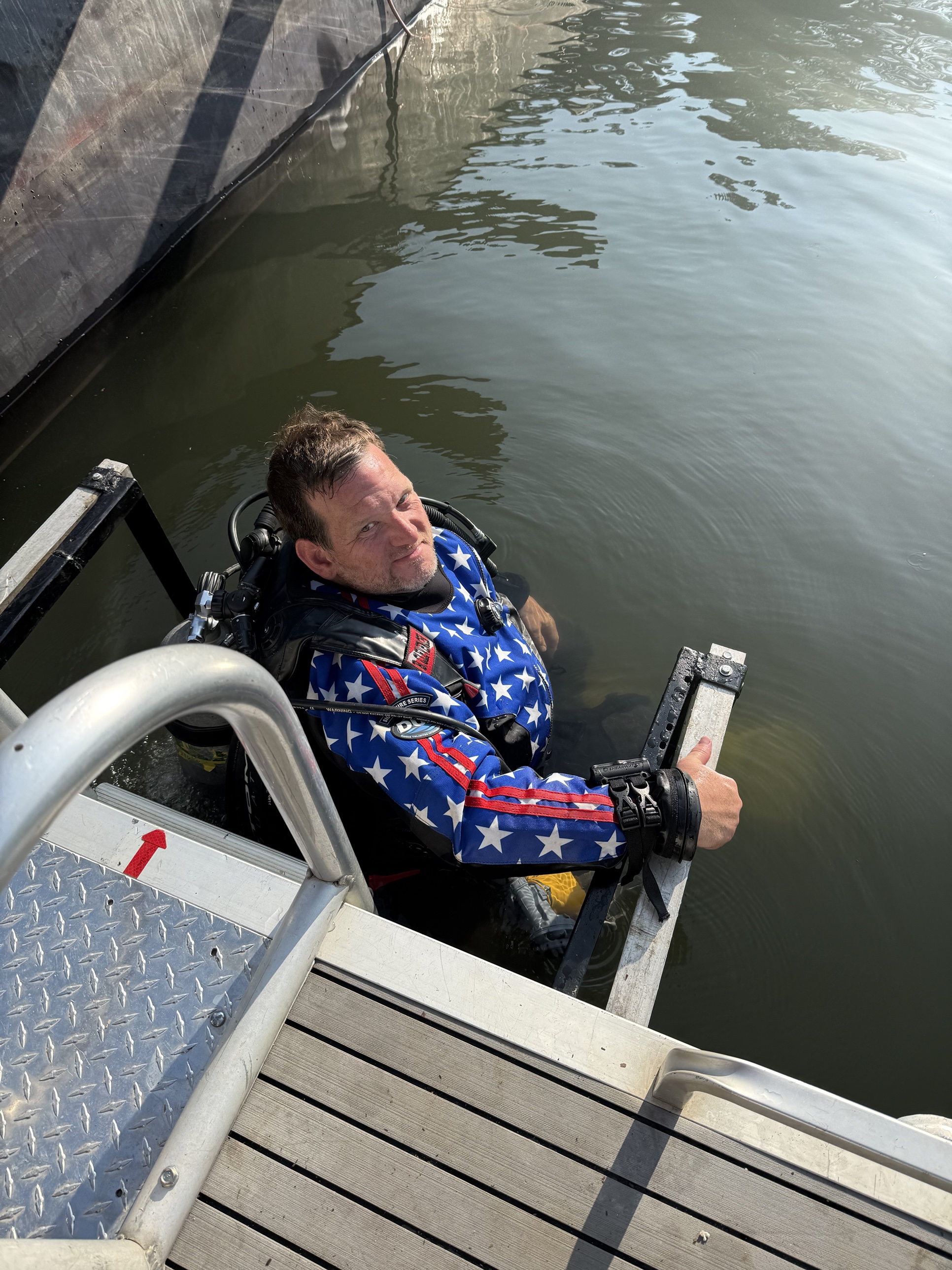
We started the first week of September and have not had a day off since. Ten hours in the water, then gear maintenance in the evening, then do it again.
The gear that is carrying the load
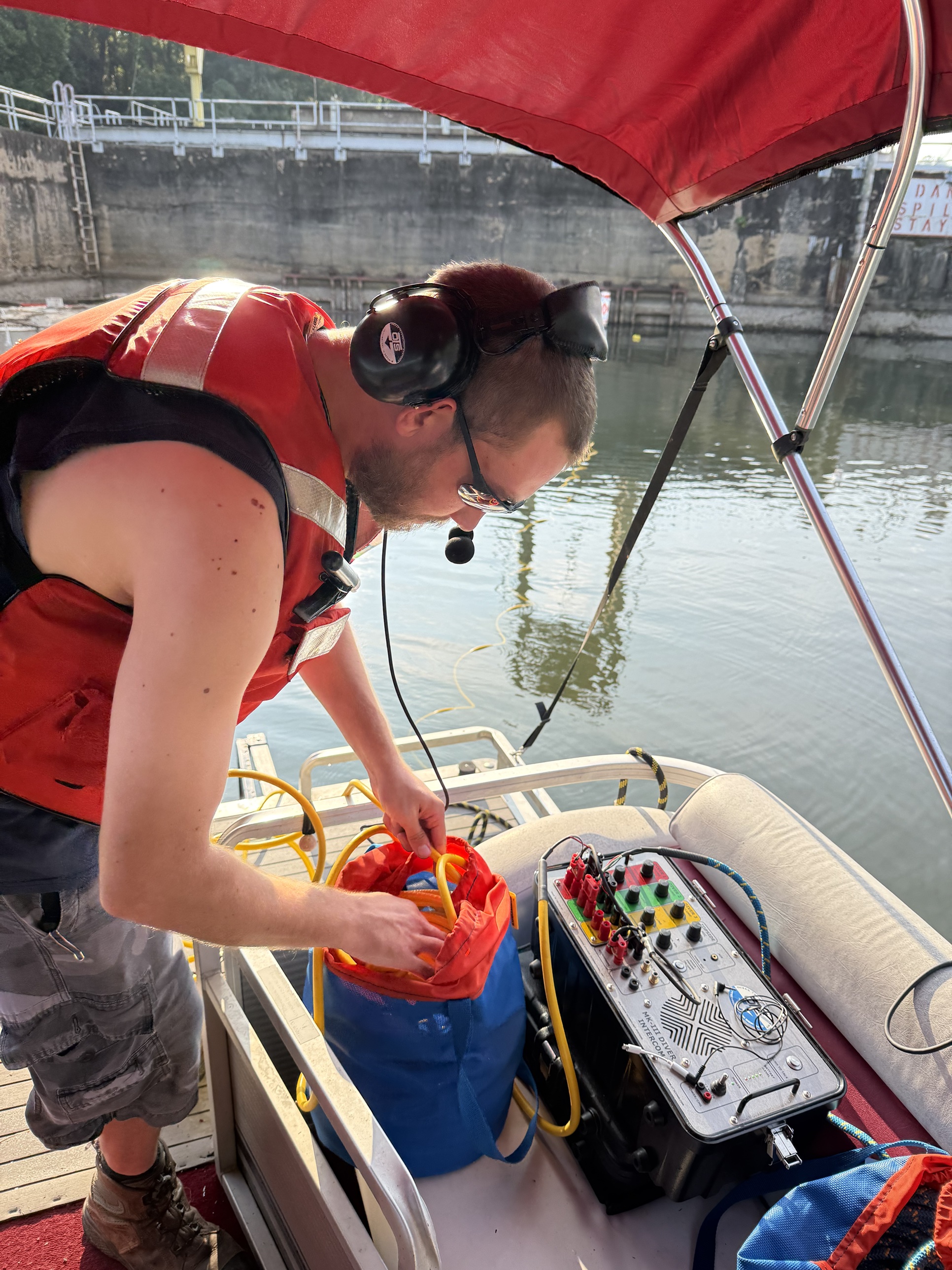
A job like this is the best equipment test there is. Nothing gets babied. Here is what we are running:
- Surface communications: the OTS MK-III three-diver hardwire intercom box topside. Hardwire comms are non-negotiable in black water next to a dam.
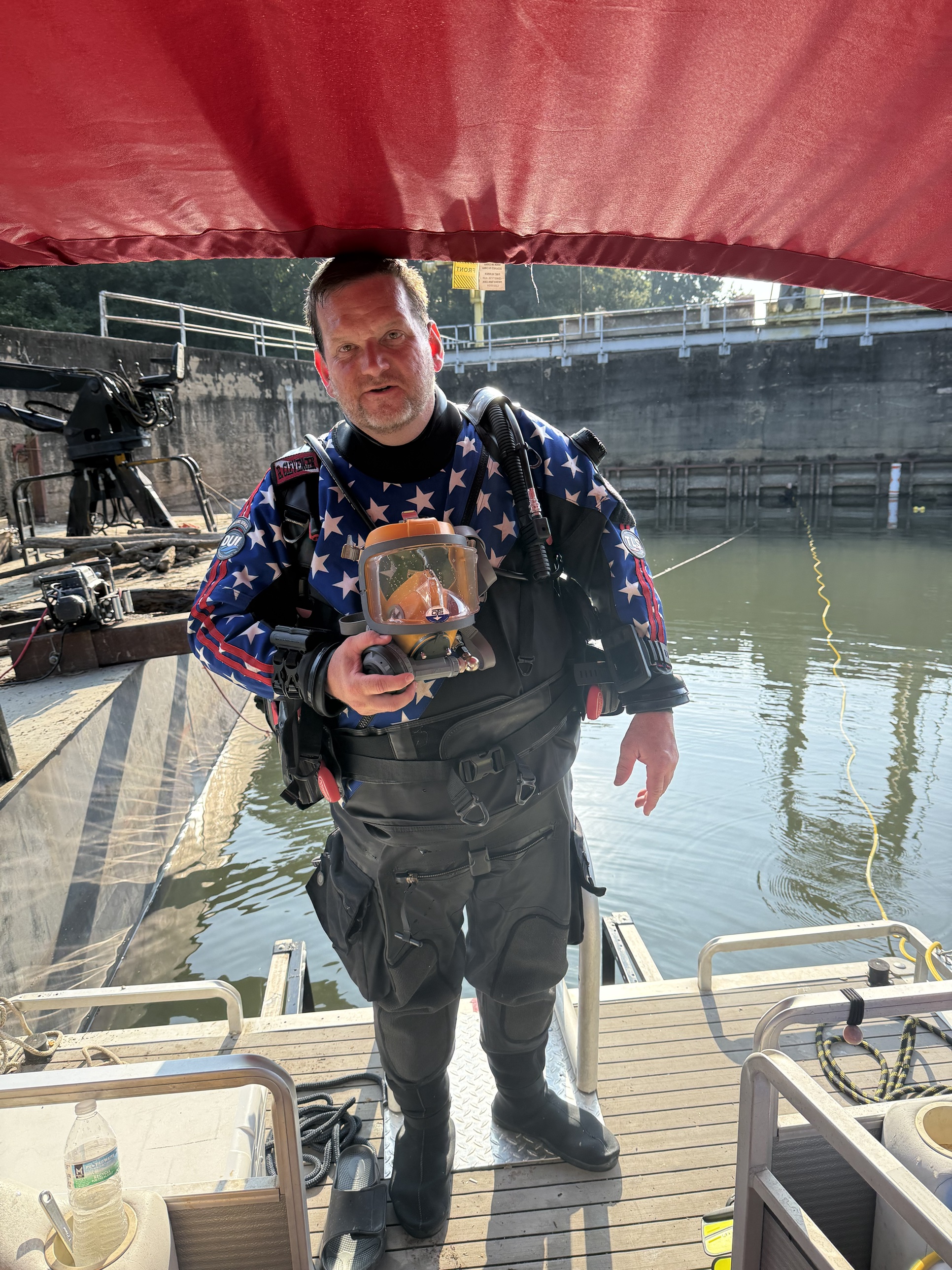
- Full-face masks: a mix of the OTS Guardian and the Interspiro Divator (AGA) full-face mask, both hardwired into the intercom.
- Regulators and dive gear: Atomic Aquatics across the board.
- Drysuits: the stars-and-stripes suit in the photos is a DUI Signature Series custom build. Three weeks of ten-hour days in a drysuit is the real test of a suit, and it has held up. We measure and order DUI Signature suits for dive teams at the shop.
- The standout: the Interspiro Divator BC system paired with the AGA mask. That combination has been the rock star of this job. It is the setup our divers keep reaching for, and after three weeks of daily abuse it has earned it.
Staying connected and self-sufficient on the water
There is no cell service at the dam. None. So the other thing this job has proven out is our mobile setup, and it has quietly become one of the most important pieces of gear on the barge.
- Starlink has kept the entire dive and barge crew connected for the whole trip — comms with the shop, weather, coordination with the contractor, and a way to reach family at the end of a ten-hour day. Without it, this crew would be working blind.
- A Jackery 3000 power station runs the Starlink, keeps every phone and radio charged, and powers the fridge all day without touching the boat.
- An Iceco portable fridge/freezer we added for this job keeps water cold and, yes, ice cream frozen. When a diver comes up after an hour in a drysuit in September heat, that matters more than it sounds.
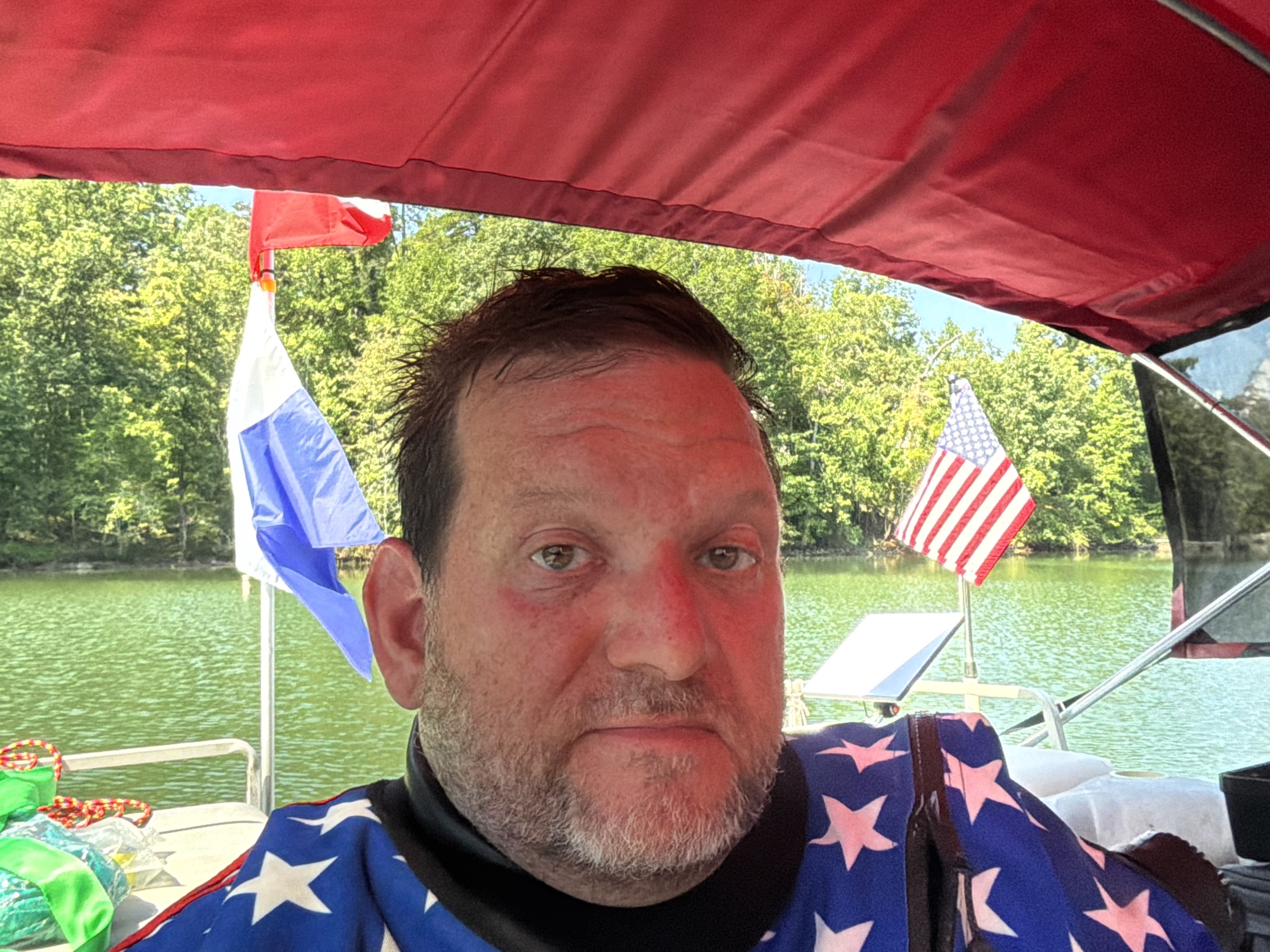
The point is not the gadgets. The point is that we can show up anywhere — a lake with no service, a river bank, a staging area after a storm — and be fully operational and self-contained from the first hour. That is what a deployable team looks like.
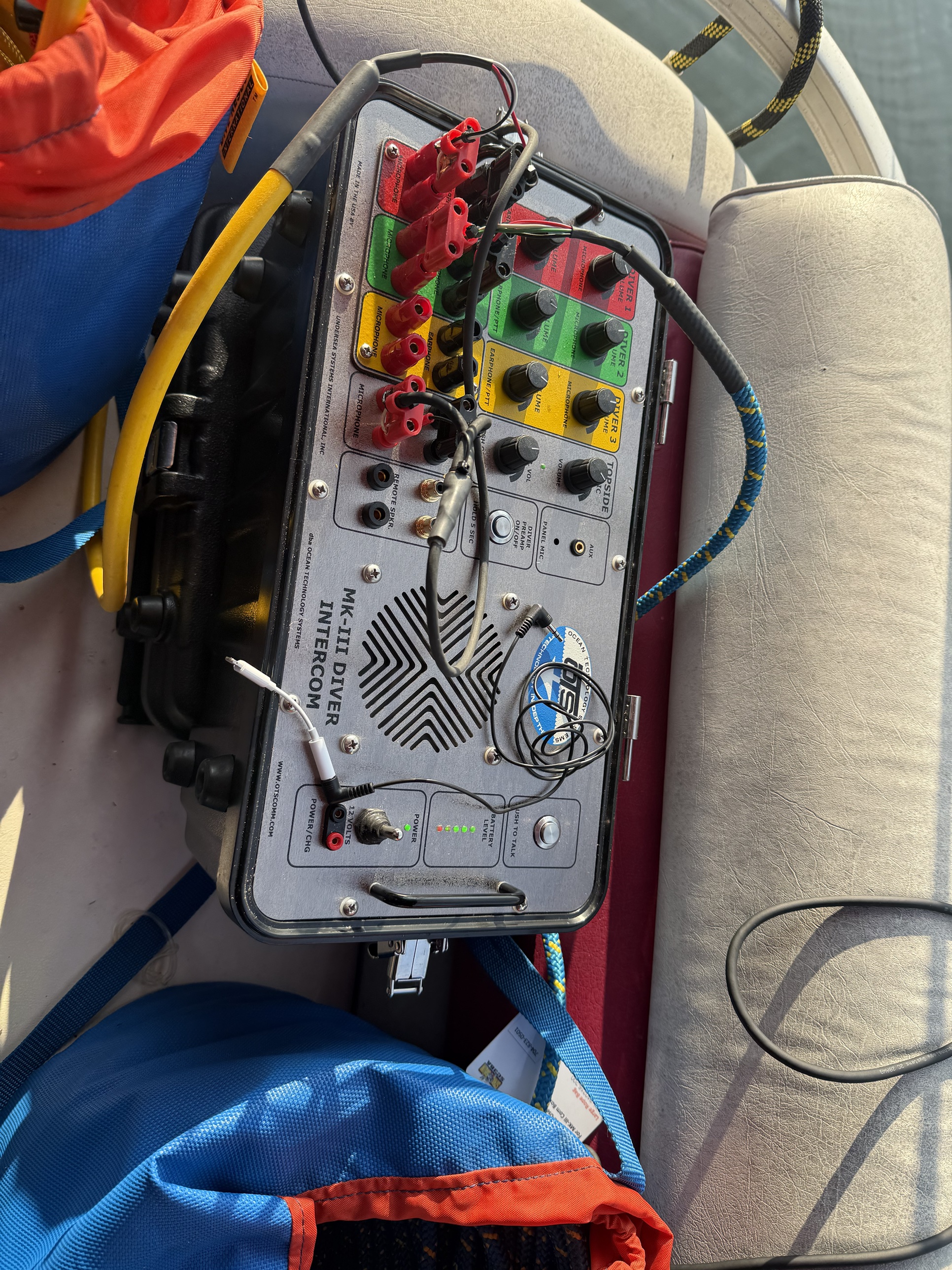
Gear breaks. That is the job.
Two-plus weeks of ten-hour days will break things, and it has. That is not a complaint — it is the reality of working at this tempo, and it is why we are an authorized Interspiro distributor and service center and an OTS service center in the first place. We are turning gear around at night to keep the crew in the water the next morning. If your team runs surface-supplied or full-face gear, the lesson is simple: carry spares, know your service intervals, and have a bench you trust. Our service and repair shop handles Interspiro, OTS, and Atomic gear for teams across the Carolinas and beyond.
Why this matters if you run a dive team
Storm recovery is a big part of what public safety and municipal dive teams end up doing, whether it is underwater recovery in North Carolina lakes or clearing debris from infrastructure like this. The gear that holds up under these conditions is the gear worth putting on your team. It is also why we can do more than sell it: we train public safety dive teams, we service their equipment, and with a fully mobile, self-supported crew we can run deployment training at your site or deploy alongside your team and your county when the real thing happens. If you are building or re-equipping a dive team and want a straight answer on full-face masks, hardwire comms, surface-supplied air, or Interspiro service, we are happy to talk through it. Request an equipment consultation or call the shop at 704-823-0501.
Watch: our biggest recovery of the job so far
This was the largest tree we have pulled on this job. The diver rigs it by feel on the bottom, calls it up to the tender, and the winch crew takes it from there. Brent is diving the Interspiro Divator mask with OTS comms in this one; the second diver is on an OTS Guardian.
From the diver’s side of the mask
The same work from the diver’s point of view: feeling into a pile of submerged trees in near-zero visibility, finding a trunk, getting a strap on it, and calling it up to the tender on hardwire comms. This diver is on an OTS Guardian with OTS communications.
Between dives, on the boat
A short behind-the-scenes look at how a day on this job actually runs: dive, surface, swap tanks and gear, brief the next diver, and go back down over the site. It is not glamorous, but it is how a multi-week debris-removal job gets done from a work boat staged over the recovery site.
Gearing up at the dam
A short look at the water's edge on this job: our diver suits up right on the Turner Shoals Dam structure with a tender standing by, then goes down into zero-visibility water to work storm debris off the bottom by feel.
The surface side of the job
While our divers work debris loose underwater by feel, the surface crew uses a grapple-equipped excavator arm staged on the dam structure to winch trees and root balls out of the water once they are rigged.
Suiting up and diving in
A longer look at what it takes to get one diver in and out of the water, all day: suiting up on deck, hardwire comms hooked up, and working the boat's dive ladder to get in and out safely, over and over.
More clips from the job are going up on the Sink or Swim Scuba YouTube channel, and we will add them here as they are uploaded.
Share this post: Facebook · LinkedIn · X · Email
Brent Clevenger is the owner of Sink or Swim Scuba in Gastonia, NC, and a Public Safety Diving Specialist. The shop is an SDI 5-Star Instructor Training Facility, an ERDI Training Facility, and an authorized Interspiro distributor and service center.
