
Are Public Safety Divers Exempt from OSHA? What NC and SC Dive Teams Need to Know
Brent Clevenger Jun 18, 2026
Are Public Safety Dive Teams in North Carolina and South Carolina Exempt from OSHA?
If you run or dive on a public safety dive team in North Carolina or South Carolina, you have probably heard someone say it with confidence:
“We’re public safety divers, so we’re exempt from OSHA.”
I have said something close to that myself over the years. It sounds right. It feels right. And depending on the exact operation, there may be some truth behind it.
But the word “exempt” causes a lot of confusion.
The better way to look at it is this: public safety diving is not automatically free from safety rules, agency responsibility, liability concerns, training expectations, or operational scrutiny just because someone says “OSHA does not apply.”
I want to walk through this the way I wish someone had walked through it with me years ago. Because the wording matters. And the confusion usually shows up at the worst possible time: after something goes wrong, when the team has to explain what it did, why it did it, and whether the operation was handled safely.
To be clear up front, this article is not legal advice. I am a dive professional with a law enforcement and public safety diving background, not an attorney. What I am sharing here is meant to help your team ask better questions and make better operational decisions. For binding answers, talk to your agency’s legal counsel and your state occupational safety program.
The First Mistake: “Exempt from OSHA” Is Too Broad
The phrase “exempt from OSHA” is usually too broad.
What most teams are really talking about is OSHA’s Commercial Diving Standard, 29 CFR 1910 Subpart T. That standard applies to many commercial diving operations, but it also says it does not apply to certain diving operations, including dives performed solely for search, rescue, or related public-safety purposes by or under the control of a governmental agency.
That is important.
But it does not mean every dive team activity is magically outside every safety concern. It does not mean your SOPs do not matter. It does not mean your agency cannot be questioned after an injury. It does not mean your equipment, training, medical planning, diver readiness, or scene management can be ignored.
A better statement would be:
“Some public safety diving operations may fall outside OSHA’s Commercial Diving Standard, but that does not remove the need for proper training, planning, equipment, documentation, and full-scene risk management.”
That is a much safer and more accurate way to think about it.
The Two Questions That Actually Matter
For practical purposes, two questions usually determine where your team stands.
Question One: What is the purpose of the dive, and who controls it?
If the dive is performed solely for search, rescue, or a related public-safety purpose, and it is done by or under the control of a governmental agency, OSHA’s Commercial Diving Standard may not apply to that operation.
That can include the kind of work police, fire, rescue, EMS, and recovery teams are commonly called to perform.
But the mission label alone does not answer everything. A public safety dive team may do different types of work. A dive performed for a government-controlled public safety purpose is not the same as a dive performed for construction, maintenance, inspection, dock repair, sewer work, or private commercial recovery.
The purpose and control of the dive matter.
Question Two: Are we dealing with employees, volunteers, or a mix?
OSHA authority generally starts with the employer and employee relationship. Paid public-sector employees, volunteer members, stipend members, workers’ compensation coverage, agency control, and state law can all affect how an operation is viewed.
That is one reason teams should not rely on assumptions. If your team has paid employees, volunteers, mutual aid partners, private contractors, or mixed staffing, it is worth having your agency leadership and legal counsel look at the issue clearly.
Why North Carolina and South Carolina Matter
North Carolina and South Carolina both operate OSHA-approved State Plans. That means their state occupational safety programs cover state and local government workplaces, not just private-sector employers.
In North Carolina, that program is handled through the North Carolina Department of Labor, Occupational Safety and Health Division.
In South Carolina, that program is handled through SC OSHA under the South Carolina Department of Labor, Licensing and Regulation.
That does not mean every public safety dive is automatically covered by Subpart T. The public-safety exclusion still matters. But it does mean public agencies in the Carolinas should not assume that “federal OSHA does not cover municipal employees” is the end of the conversation.
In our region, state occupational safety authority, agency policy, SOPs, training standards, risk management, and post-incident review can all matter.
Who Actually Has a Say?
This is where many teams stop short. The answer is not just “OSHA” or “not OSHA.”
Depending on your mission, your team may be affected by several layers of authority, guidance, or expectations.
Your own agency policies and standard operating procedures matter. These are often stricter than outside standards, and they are usually what gets enforced day to day. If something goes wrong, your SOPs may be one of the first things reviewed.
State occupational safety programs may matter. In North Carolina and South Carolina, the state programs cover public-sector workplaces. Even if a particular public safety dive falls outside Subpart T, the agency still has a responsibility to manage workplace safety.
NFPA standards may matter. Many fire and rescue agencies still talk in terms of NFPA 1006 and NFPA 1670, though much of that technical rescue guidance has been consolidated into NFPA 2500. These standards are not automatically law by themselves, but they are often adopted by agencies and commonly used as a benchmark for training, operations, and the standard of care.
NIMS and resource typing may matter. If your team deploys through mutual aid, emergency management, or grant-funded systems, FEMA/NIMS resource typing and team capability expectations may become part of the conversation.
Maritime and navigable water issues may matter. Some operations can involve federal jurisdiction, maritime rules, U.S. Coast Guard authority, or other overlapping requirements.
The takeaway is simple: “Are we exempt from OSHA?” is too simple of a question. The better question is:
“What rules, policies, standards, and expectations apply to this specific dive, with this team, under this agency, for this mission?”
The Hard Part: Not Every Dive Team Mission Is the Same
This is the part that surprises a lot of teams.
A public safety dive team may conduct searches, rescues, body recoveries, evidence recoveries, vehicle recoveries, training dives, sonar work, mutual aid calls, public demonstrations, and equipment evaluations.
Those are not all the same from a regulatory, operational, or liability standpoint.
A government-controlled search, rescue, recovery, or law enforcement operation may fall within the public-safety language. But if the same divers are doing work that looks more like commercial diving, construction, maintenance, inspection, private property recovery, or non-public-safety work, the analysis can change.
That is why teams should document the mission purpose, authority, command structure, risk assessment, equipment used, and operational decisions. You do not want to be figuring out what kind of dive it was after something has already gone wrong.
Exempt From One Standard Does Not Mean Exempt From Risk
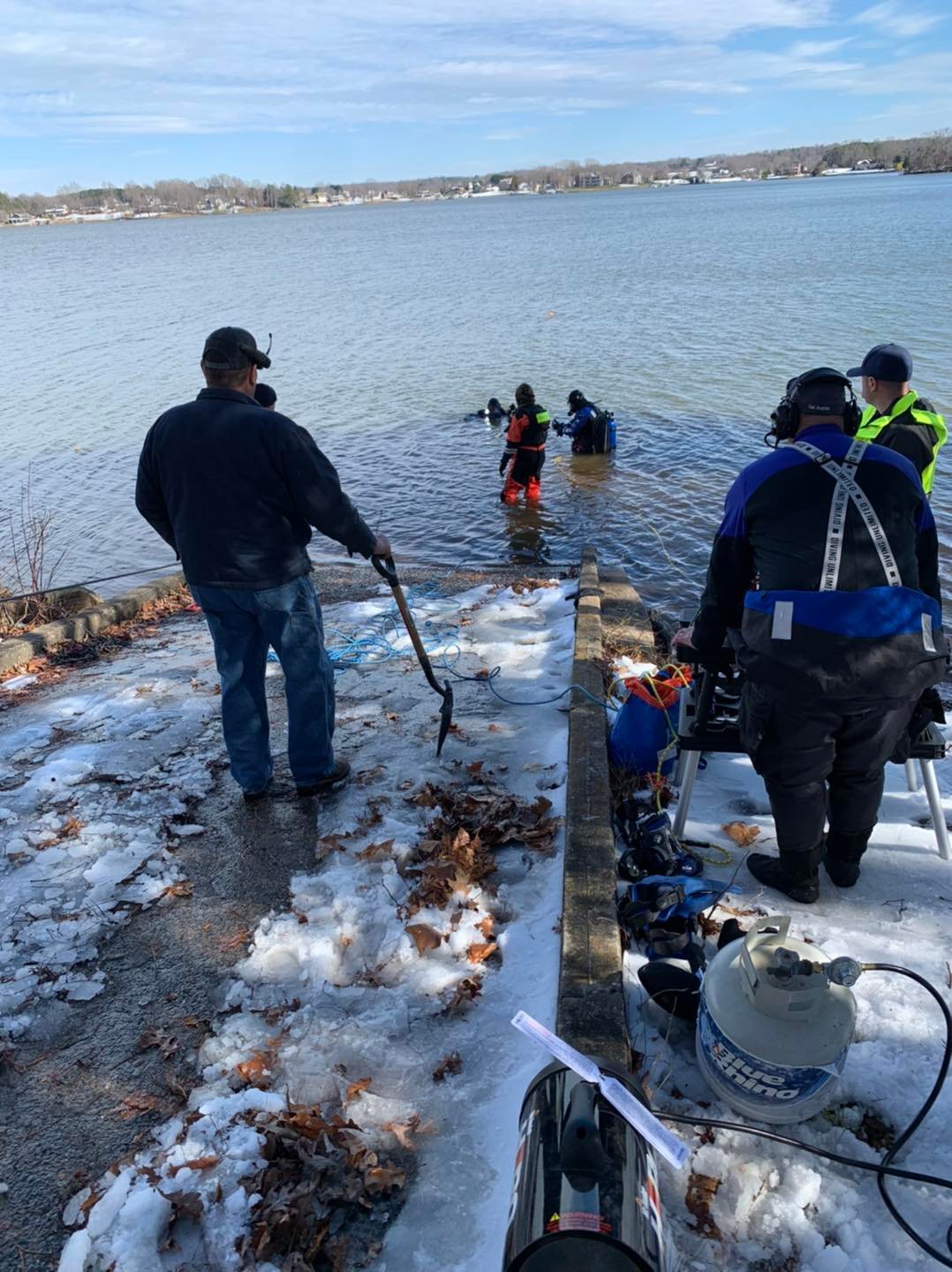
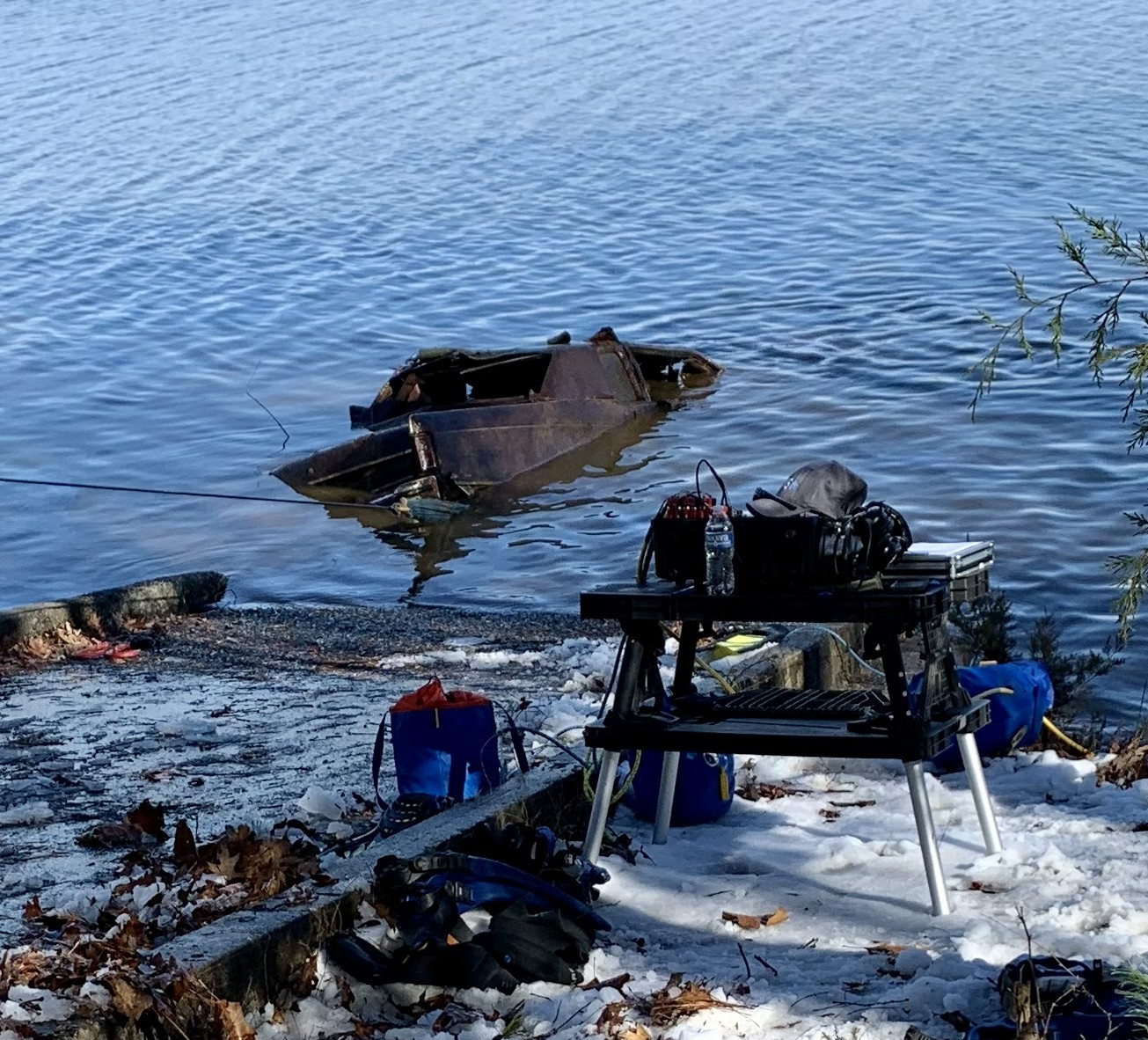
Even when a public safety dive falls outside OSHA’s Commercial Diving Standard, that does not mean the operation is free from risk, responsibility, or later scrutiny.
A real vehicle recovery I worked years ago is a good example.
The dive itself went well. The vehicle was recovered, the divers completed the underwater work, and the operation was successful from a diving standpoint. We were working in cold conditions, wearing DUI TLS 350 drysuits, and using hardwire diver communications with the OTS MK III 3-Diver Intercom.
That type of equipment matters. In cold-water public safety diving, a drysuit is not just about comfort. Diver communications are not just a convenience. Proper gear helps the team manage exposure, maintain control, communicate with the diver, and respond when conditions change.
You can learn more about the OTS MK III 3-Diver Intercom here:
https://sinkorswimscuba.com/products/ots_mk_iii_3_diver_intercom
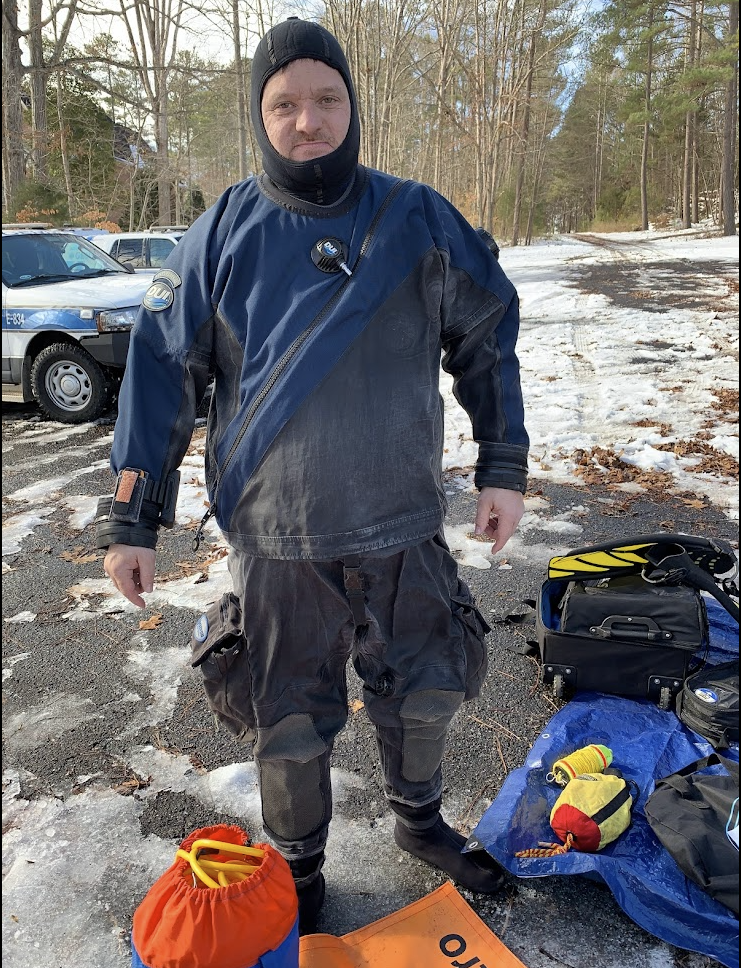
But the most violent accident of the day did not happen underwater.
After the dive, while still in my drysuit, another diver and I were being transported back from the water when the golf cart we were riding in rolled over hard on the ice. We were banged up, but it could have been much worse.
That incident has always stuck with me because it is a reminder that public safety diving is not just about the diver underwater. The shoreline, ice, weather, equipment staging, personnel movement, transportation, and post-dive operations all matter.
From a risk-management standpoint, the question is not just, “Were we exempt from this part of OSHA?” The better question is, “Were we managing the entire scene in a way that protected our people and could be explained later if something went badly?”
That is not about pointing fingers. It is about understanding that public safety diving is a full-scene operation. Accidents can happen before the dive, during the dive, or after the diver is already out of the water.
So What Should a Team Actually Do?
The answer is not to panic, and it is not to pretend every public safety dive team has to operate like an offshore commercial diving contractor.
The answer is to build a serious, defensible, practical safety program around the work your team actually performs.
That means your team should be able to answer basic questions before the call, not after the injury.
- Who is in charge of the dive operation?
- Who is the diver?
- Who is the tender?
- Who is the backup diver?
- What communication system is being used?
- What is the emergency plan?
- What is the medical plan?
- Is oxygen available?
- Is the diver trained for this environment?
- Is the equipment appropriate for the mission?
- Has the team practiced this type of operation?
- Are the conditions within the team’s capabilities?
- Are the dive logs, equipment records, and training records current?
Those questions matter whether Subpart T technically applies or not.
Good teams do not rely on the word “exempt.” Good teams build systems that protect their divers and can be explained later.
Practical Compliance Without Overcomplicating the Mission
I believe public safety dive teams should work toward practical, voluntary compliance with the safety concepts that make sense for their operations.
That does not mean copying every commercial diving requirement that was written for a completely different kind of work. Public safety diving is different. The missions are different. The conditions are different. The staffing models are different. The urgency can be different.
But the core safety concepts are still valuable.
- Dive team qualifications matter.
- A written safe practices manual matters.
- Pre-dive procedures matter.
- Post-dive procedures matter.
- Equipment inspection and maintenance matter.
- Diver communications matter.
- Emergency planning matters.
- Records matter.
Training matters.
The goal is not paperwork for the sake of paperwork. The goal is to protect divers and build a program that can stand up to scrutiny if the operation is ever questioned.
How Sink or Swim Scuba Helps
This is the world we live in.
With a law enforcement and public safety diving background, ERDI training facility status, and public safety diving equipment support under one roof, Sink or Swim Scuba is positioned to help teams think through more than just a gear purchase.
We help teams with training, equipment selection, drysuits, full face masks, hardwire communications, surface support, diver readiness, and the full-scene risks that exist before, during, and after the dive.
We support fire, law enforcement, EMS, rescue, and recovery teams across North Carolina, South Carolina, and the East Coast. If your team needs to talk through training, compliance posture, equipment, or operational readiness, that conversation is exactly what we are here for.
We are also an authorized Interspiro distributor and support public safety teams with full face masks, surface-supplied systems, communications, service, and practical equipment planning.
Start the Conversation
If your team is sorting through training, compliance posture, equipment decisions, or public safety dive team readiness, give us a call at (704) 823-0501 or reach out through Sink or Swim Scuba.
We are glad to help you think it through.
Again, this article is educational and is not legal advice. For binding answers about your specific team, confirm with your agency’s legal counsel and your state occupational safety program.
Public safety diving is serious work. The water is only one part of the operation.
Related: our authorized Interspiro distributorship, request a dive-team equipment quote.
Not sure what applies to your team? Our readiness support program can help you work through it.
Related reading: the specialized roles on a dive team.
